
What is fish plate in railway
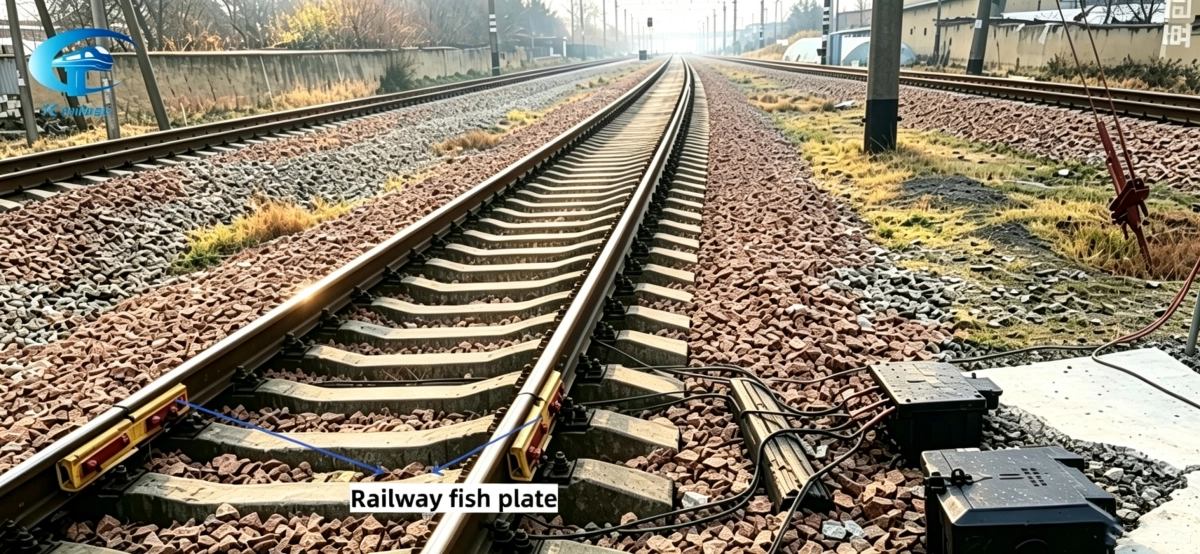
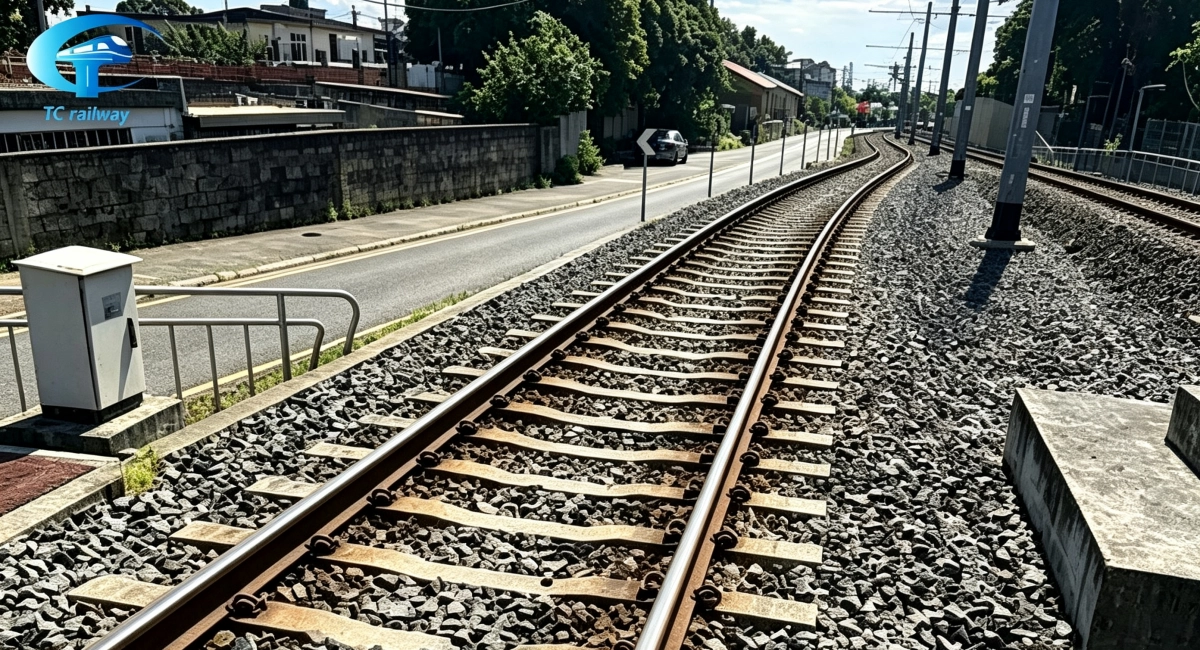
A railway fish plate, also called rail joint bar or rail splice bar, is a critical fastening component used to join adjacent steel rails. It is narrow in the middle and wider at both ends — with a fish-tail-like profile, hence its name, the rail fish plate. It features bolt holes along its central section. Along the horizontal axis of these bolt holes, it has upper working faces for bearing against the underside of the rail head, and lower working faces for bearing against the top surface of the rail base. The fishplate, together with high-strength bolts, clamps the rail web, enabling the rail joint to withstand vertical, lateral and longitudinal loads, and maintaining track continuity and correct track geometry. Therefore, this simple structural design mitigates wheel-induced impact at rail joints, improves the continuity of longitudinal deformation at the joints, and effectively enhances running smoothness for passing trains. Therefore, fishplates play a vital role in maintaining stable operation of railway tracks.
Types of fish plate in railway
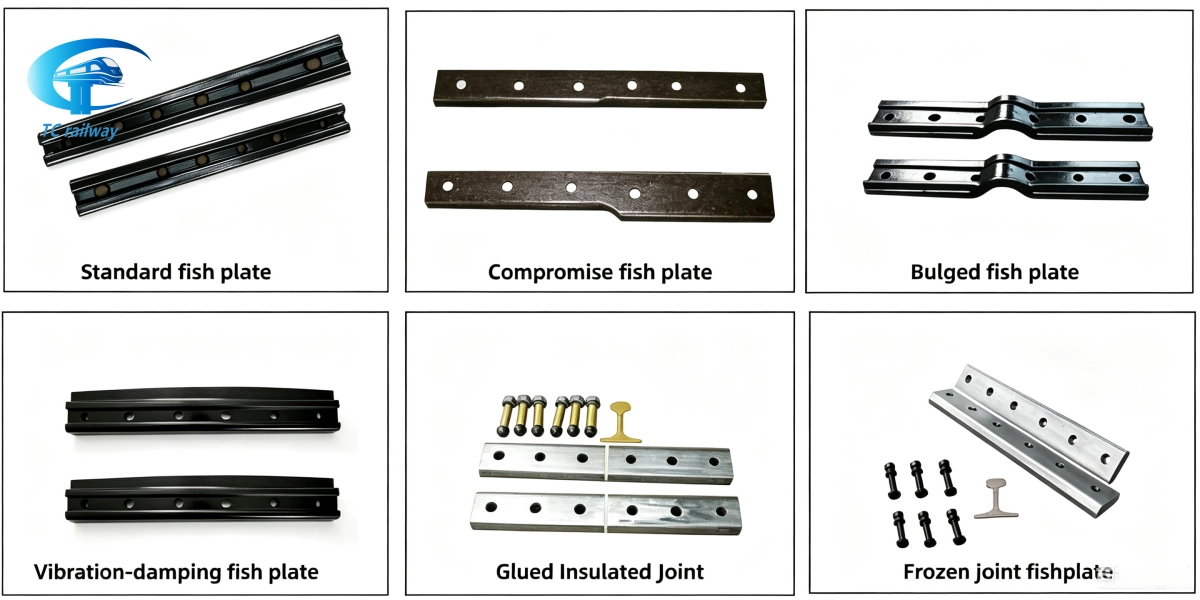
As a professional manufacturer of railway fishplates, we supply diverse types of fishplates that are classified by various criteria. They include standard fishplates, compromise fishplates, bulged (joggled) fishplates, frozen joint fishplates, insulated fishplates and glued insulated fishplates. We also offer 4-hole and 6-hole options to suit various track conditions. Please see further details below.
1. Classified by the theoretical weight per meter of rails
Based on the theoretical weight per meter of rails, the fishplates we manufacture are available in a complete range of specifications to fit rails ranging from 8kg/m to 120kg/m. Among them, our fishplates compatible with 43kg/m, 49kg/m, 50kg/m, 54kg/m, 60kg/m, 65kg/m and 75kg/m rails are the most widely-used across global railway markets.
2. Classified by outer shape and plate profile of railway fish plate
According to their section profiles, our manufactured fishplates are classified into three categories: standard, compromise and bulged fishplates. Please refer to the details below.
a. Standard fishplates:
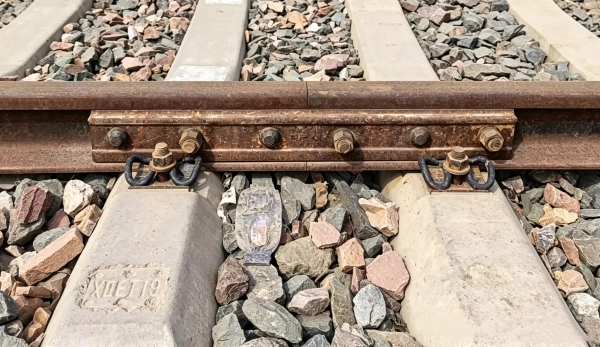
The standard fish plate that we manufactured is used in conjunction with bolts to join two rails of the same section on ordinary tracks. And it is the most basic and most widely used type of rail joint. You can see the pictures below for details.
b. Compromise fishplate
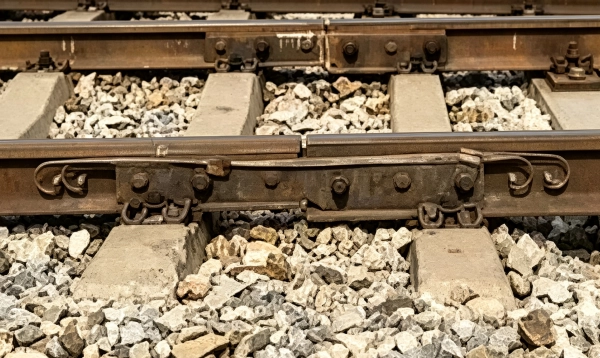
The compromise fish plate that we manufactured is used to splice two rails of different types or sectionsfor example, connecting a 60 kg/m rail with a 50 kg/m rail, this special fishplate ensures a smooth transition of rail top surfaces and gauge lines. You can see the pictures below for details.
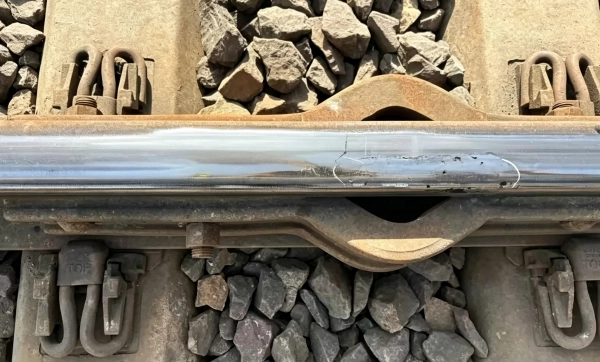
c. Bulged joint bar
We specialize inmanufacturing bulged fishplate (joggled joint bar). Its key characteristic is a raised bulged structure at its central section, which enables it to handle connection issues at special sites such as rail welds and rail-damaged sections. It allows for quick installation and can serve as an emergency part to put the track back into service with minimal downtime. You can see the pictures below for details.
3. Classified by function of railway fish plate
According to the function of railway fish plates, our manufactured fishplates are classified into three categories: frozen joint fishplate, insulated rail joint and glued insulated joint. Please refer to the details below.
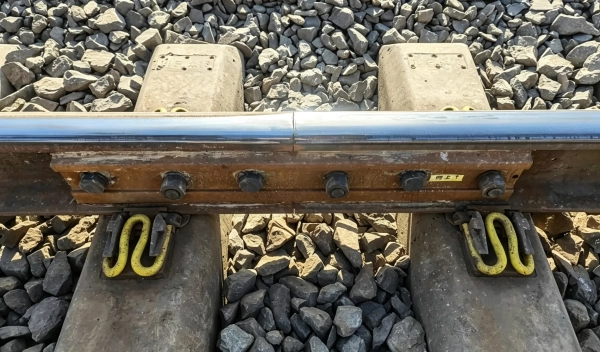
a. Frozen joint fishplate
The frozen fishplate we manufacture relies on high-tensile bolts and its special structural design to "freeze" rail joints, to keep rail ends tightly closed and replicate seamless track performance. It is widely used at switches and bridges to reduce joint impact. You can see the pictures below for details.
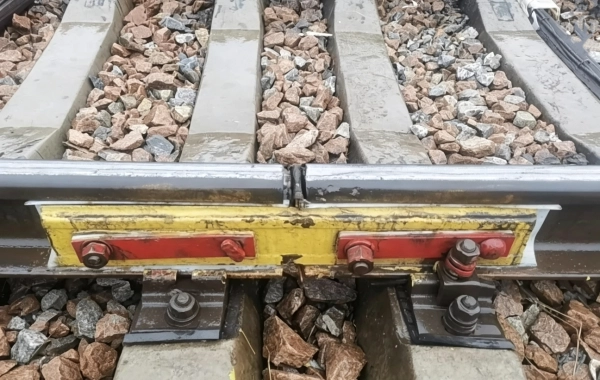
b. Insulated fishplate
Our insulated fishplate (insulated joint bar) uses nylon rail-head pads, nylon fishplate insulators, and nylon bolt sleeves to separate rails, joint bars, and bolts, preventing current flow and providing electrical insulation. It is installed at the boundaries between adjacent automatic block sections, where they effectively stop track circuit signal current from passing from one block section to the next, ensuring the reliable operation of the railway signalling system. You can see the pictures below for details.
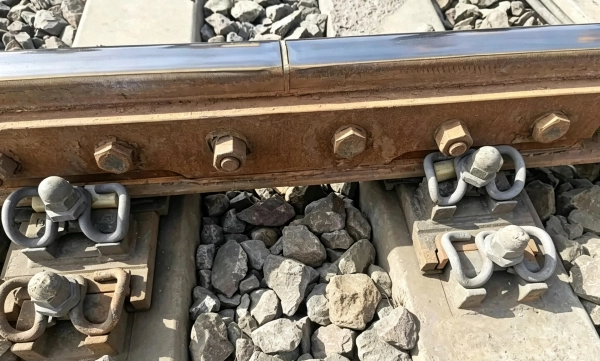
c. Glued insulated joint
Our glued insulated joint (Bonded Insulated Joint) bonds the rails and fishplates into an integral unit with adhesive. This structure not only provides electrical insulation, but also greatly improves the stress state of the joint and increases joint resistance. It is widely used on ultra-long continuously welded rail (CWR) lines. You can see the pictures below for details.
4. Classified by number of holes of railway fish plate
According to the number of bolt holes, our fishplates are available in two types: 4-hole and 6-hole. We can manufacture fishplates conforming to various national standards, and the suitable type can be selected according to track service conditions.
5. Classified by material of railway fish plate
According to material grades, our fishplates can be manufactured from Grade 55 steel or high-performance alloy steel. We offer both rolled and forged options to fully satisfy the requirements of diverse national standards and track service conditions.
Dedicated and reliable rail fishplate manufacturer
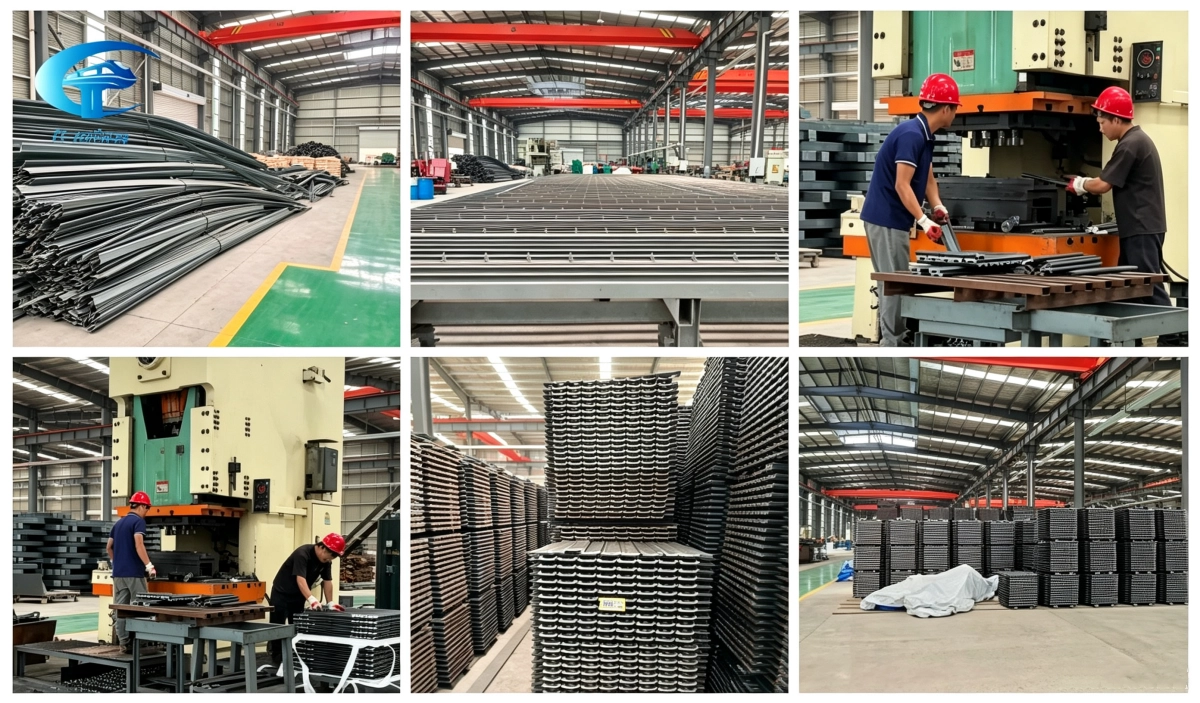
We specialize in manufacturing various types of rail joint bars, with considerable annual output and sales volumes in China. To be mentioned, our glued insulated rail joint bars have obtained CRCC certification. This May, we commissioned a new production line for UIC rail fish plates, further enhancing our manufacturing capacity. We can supply railway fishplates complying with various international standards. Quality is our top priority. We conduct tests in our own lab and send samples for third-party verification annually to guarantee consistent product quality. Customization is available. If you have any requirements for railway fish plates, please feel free to contact us for more details.

 English
 Русский