
Railway Turnout Three-Gap Defects
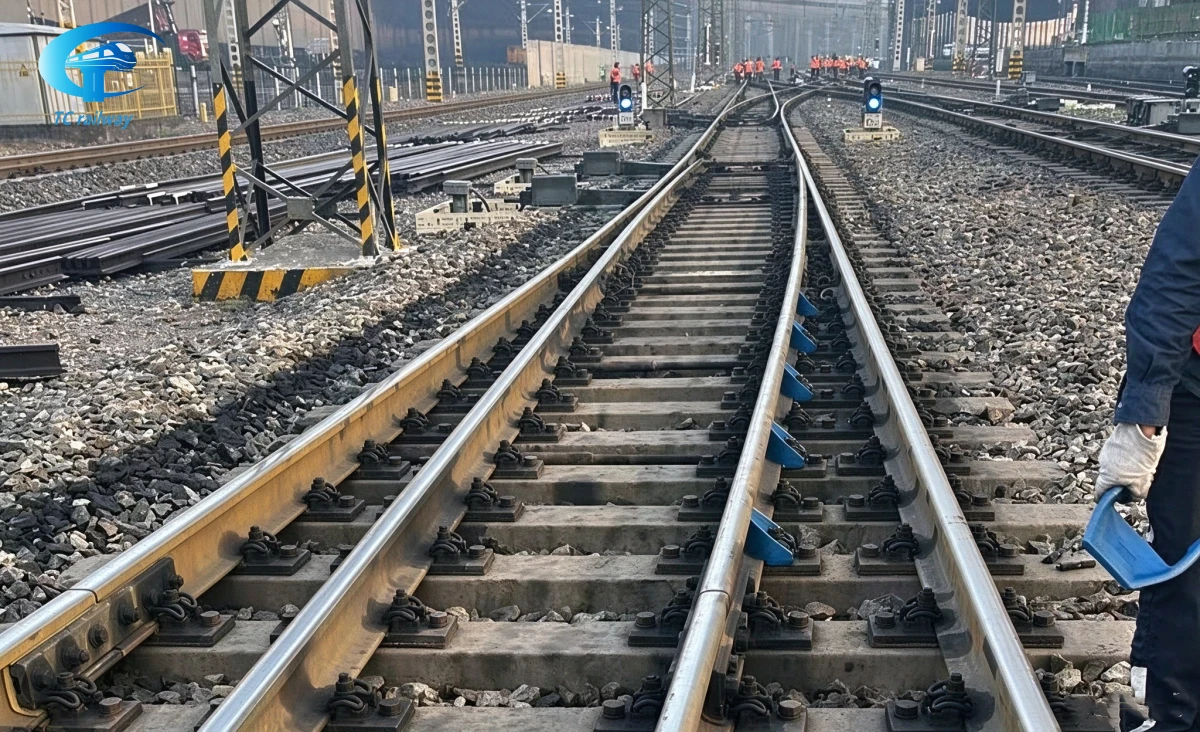
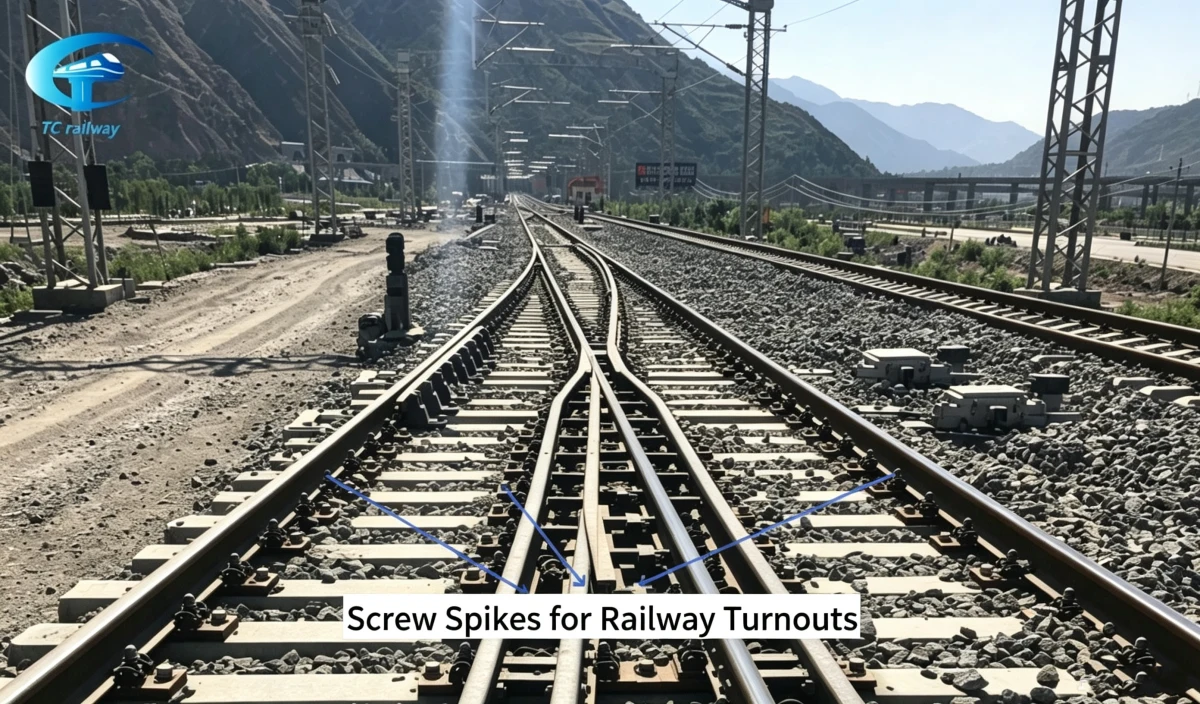
Railway turnouts are complex, with numerous components. They withstand heavy impacts from rolling stock and meet high technical standards. They are therefore a critical and challenging focus for routine maintenance by both track and signal teams. Railway turnout three-gap defects are critical safety hazards in the switch area and pose a direct risk to safe train operation. Specifically, these are three critical unwanted gaps in the turnout switch blade section. Even though these gaps are small, often only a few millimetres wide, they may cause a chain reaction under dynamic train loads, seriously weakening the turnout’s structural integrity and stability. Below, we provide a detailed analysis covering their definition, hazards, impacts, rectification requirements, etc. This helps rectify defects at the turnout track-signal interface, improving turnout performance and ensuring stable and reliable operation.
Railway Turnout Three-Gap Defects Definition
Where three‑gap turnout defects are present, the stock rail is not restrained from lateral movement under train loading, or 4 mm test conditions. The stock rail cannot be held securely, which causes poor turnout alignment, gauge deviations, 4 mm test failure and indication gap drift. Where asymmetric gaps develop, the stock rail creeps out of alignment, in turn leading to compromised turnout locking.
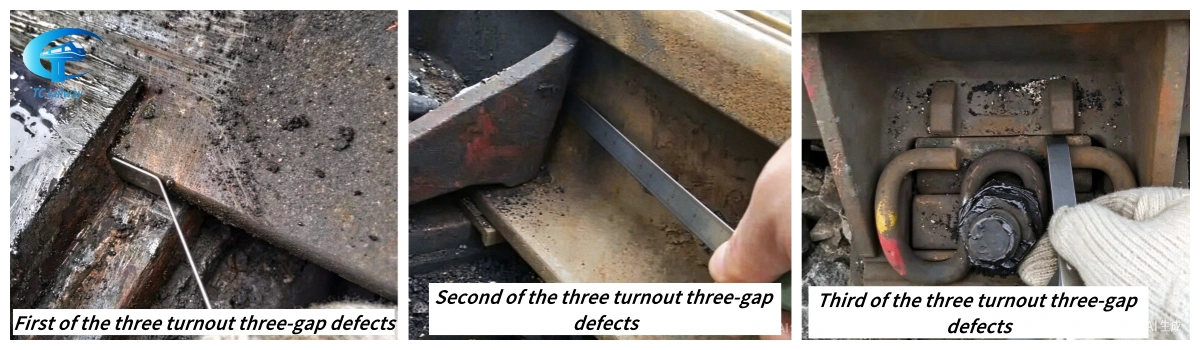
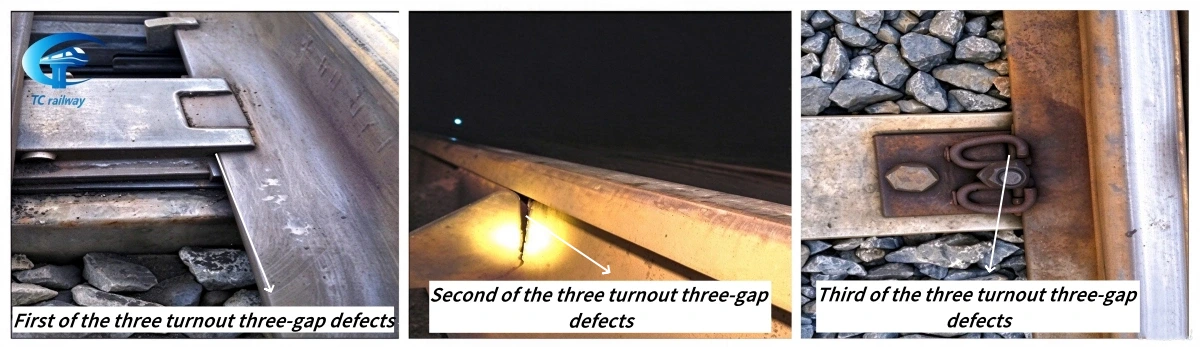
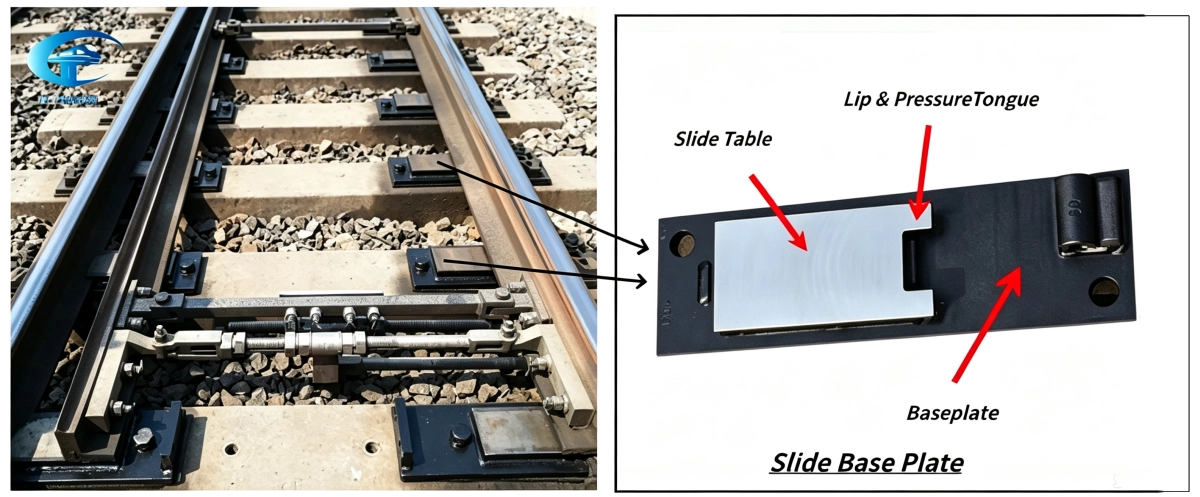
1. It describes gaps between the bottom edge of the stock rail and the slide bed edge.
2. It refers to gaps where the stock rail’s outer jaw and upper rail base contact the rail brace.
3. These are gaps between the tail of the rail brace and the shoulder of the slide bed.
Note: The gaps between gauge blocks and the bottom edge of the stock rail are also unwanted.
Technical Specification
1. The gap between the stock rail base and the slide bed recess edge shall not exceed 1 mm.
2. The gap between the stock rail jaw and the outer rail brace shall not exceed 0.5 mm.
3. The gap between the stock rail and the slide plate shoulder shall not exceed 0.5 mm.
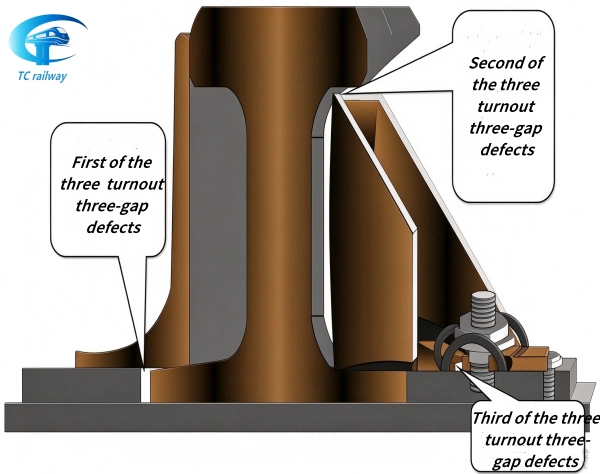
Three Key Railway Turnout Three-Gap Defects and Their Hazards
1. The gap between the slide bed plate and the stock rail base
a. Description:
The stock rail base is not fully seated in the slide bed groove, creating a gap, especially on the outer side of the rail base.
b. Hazards:
This is the most critical, highest-risk gap, which directly leaves the stock rail suspended or inadequately supported. When subjected to heavy wheel load impacts, the stock rail deflects downward (commonly referred to as “hanging rail”). This results in rail surface irregularity, increased dynamic gauge, and severe impact and vibration. It accelerates deterioration of fasteners, base plates and sleepers, and seriously impairs the switch blade’s closure and locking reliability.
2. The gap between the rail brace and the stock rail web
a. Description:
The rail brace fails to make firm contact with the stock rail web.
b. Hazards:
This means the rail brace cannot provide effective lateral support. Under lateral train forces, the stock rail is prone to shifting outward. This widens the gauge, reduces the switch blade’s closure force, and accelerates wear and deformation of the stock rail and rail brace.
3. Gap between the rail brace and the slide bed plate (mounting plate)
a. Description:
The base of the rail brace fails to seat firmly on the slide bed plate, creating a gap.
b. Hazards:
The rail brace cannot transfer lateral forces reliably to the plate foundation, making it prone to loosening, tilting and even failure. This further weakens support for the stock rail and impairs turnout frame stability.
Impacts of Railway Turnout Three-Gap Defects
1. Reduced frame stiffness:
The turnout is less able to resist lateral and vertical deformation overall.
2. Dynamic gauge widening:
There is a sharp rise in the risk of the gauge exceeding limits during train passage.
3. Poor switch blade closure:
The switch blade cannot fit tightly against the stock rail. This may cause switching jamming or the “four‑way opening” fault.
4. Accelerated component damage:
It causes abnormal wear, deformation and even fracture of rails, rail braces, plates, fasteners and sleepers.
5. Eteriorated wheel‑rail interaction:
It increases wheel‑rail impact forces, creates noise and reduces riding comfort.
6. Threatened running safety:
In severe cases, it may cause train derailment.
Railway Turnout Three-Gap Rectification
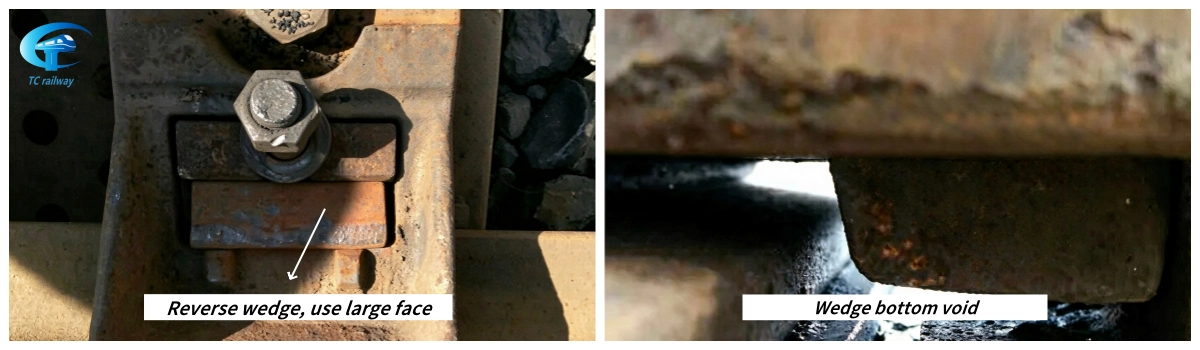
When the wedge seats down and contacts the slide bed plate, it tends to become ineffective, with red rust developing on the friction surface.
1. Flip and Drive the Outer Wedge on the Stock Rail
Reverse the outer wedge fitted on the stock rail to switch its working face. Then, drive the wedge in with a hammer. Ensure the wedge surface sits slightly above the rail brace surface. Consequently, the gap between the rail brace and the stock rail head is eliminated.
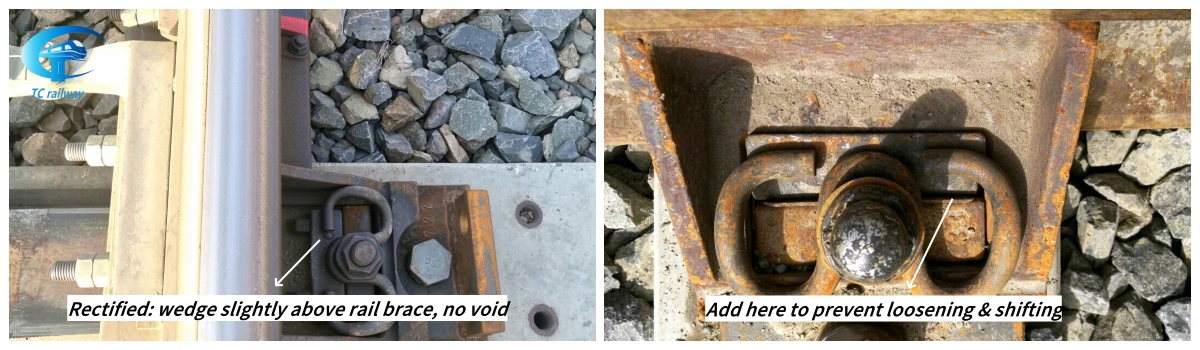
2. Add Adjusting Shims If the Wedge’s Large Working Face Does Not Seat
If the wedge still does not work with its larger working face, add adjusting shims at the wedge. Ensure the wedge surface sits slightly higher and a gap is left at the bottom. You should install the adjusting shims under the spring clip, between the wedge and fixed seat iron, to stop them sliding out.
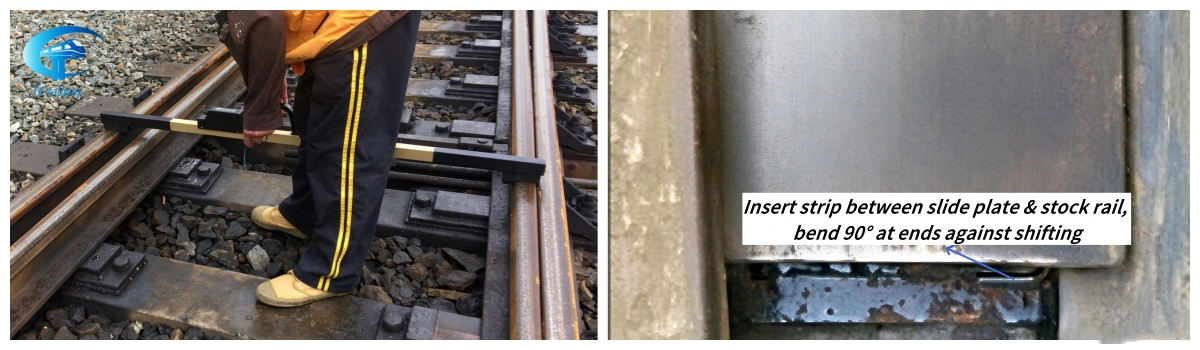
3. Adjust the Gap Between Stock Rail and Slide Bed Plate
When addressing the gap between the stock rail and slide bed plate, track staff first measure the gauge and keep it within the correct range. Then remove the outer wedge, insert adjusting strips on the inner side, and fasten the outer wedge back in position.
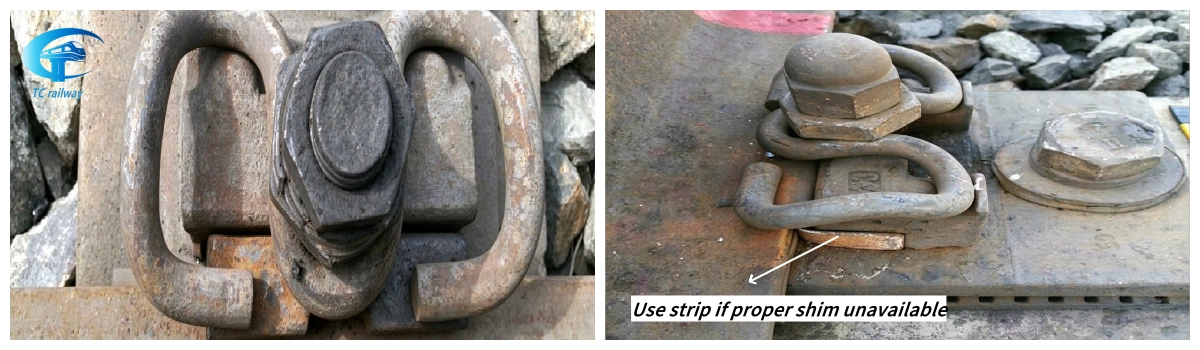
4. Replace an Ineffective Gauge Adjustment Block
If the gauge adjustment block doesn’t work, just replace it with a block of the right size. And they should be tapped into place with a hammer. Blocks that slip in freely are ineffective.
Railway Turnout Three-Gap Remediation Requirements
1. Zero-Gap" Installation and Acceptance Criteria
a. Ensure Tight Contact Between Rail, Tie Plate and Sleeper
The rail shall maintain tight contact with the tie plate, and the tie plate with the sleeper rail seat. Inspect with a feeler gauge; no visible gaps are allowed.
b. Secure the Gauge Block Against Rail Base and Sleeper Shoulder
The gauge block shall be held tight against the rail base side and sleeper shoulder. Any gap will weaken gauge retention.
c. Verify Elastic Clip Contact and Clamping Force
The elastic clip shall maintain "three-point contact" or the tight fit specified in the design to guarantee compliant clamping force. Inspect with special tools or by visual inspection.
2. Torque is the lifeline.
a. Tighten Bolts and Spiral Spikes With Calibrated Torque Wrenches
Bolts (spiral spikes) shall be tightened using only regularly calibrated torque wrenches.
b. Apply Proper Torque Settings for All Turnout Fasteners
Torque shall meet the design requirements (different fasteners have different specs, usually 120–200 N・m). Too little torque causes loosening and develops gaps; too much torque can crack or break the parts.
c. Carry Out Bolt Torque Rechecks in Planned Maintenance
Make bolt torque checks a priority in routine and scheduled maintenance. After installation or retightening, bolts require a second tightening once the set train tonnage is reached.
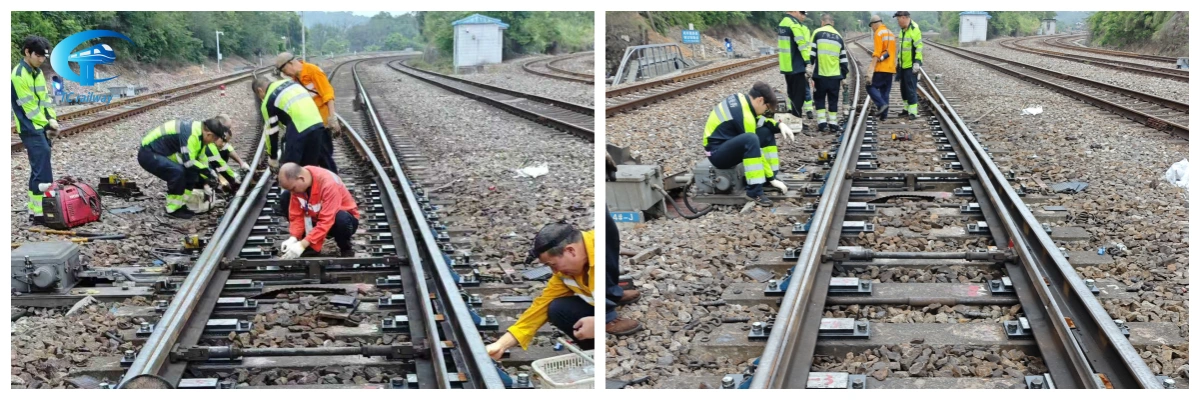
3. Periodic Inspections Combined with Dynamic Monitoring
a. Static inspection:
Use track gauges, feeler gauges and torque wrenches per specifications to check track gauge, cross level, alignment, vertical profile, connection gaps and bolt torque. Focus on areas where "three seating gaps" often develop.
b. Dynamic monitoring:
Review data from track inspection cars and on-board track detectors. Focus on metrics such as gauge change rate and gauge standard deviation, to guide static precision adjustments.
Establish a cross-verification system for dynamic and static inspections.
c. Recheck and Repair Tracks That Fail Dynamic Inspection
It calls for prompt static rechecks and repairs on dynamically out-of-tolerance track sections, It verifies the effectiveness of static repairs on these defects via dynamic monitoring. Dynamic monitoring checks how well static repairs for these defects work.
4. Zero-Tolerance Replacement for Worn and Damaged Components
It calls for immediate replacement of tie plates, nylon sleeves, spring clips, bolts and damaged sleepers if they are worn beyond limits, failed, cracked or heavily corroded. Do not operate with damaged parts. Damaged components directly cause connection gaps and fastening failures.
Main Causes of Railway Turnout Three-Gap Defects
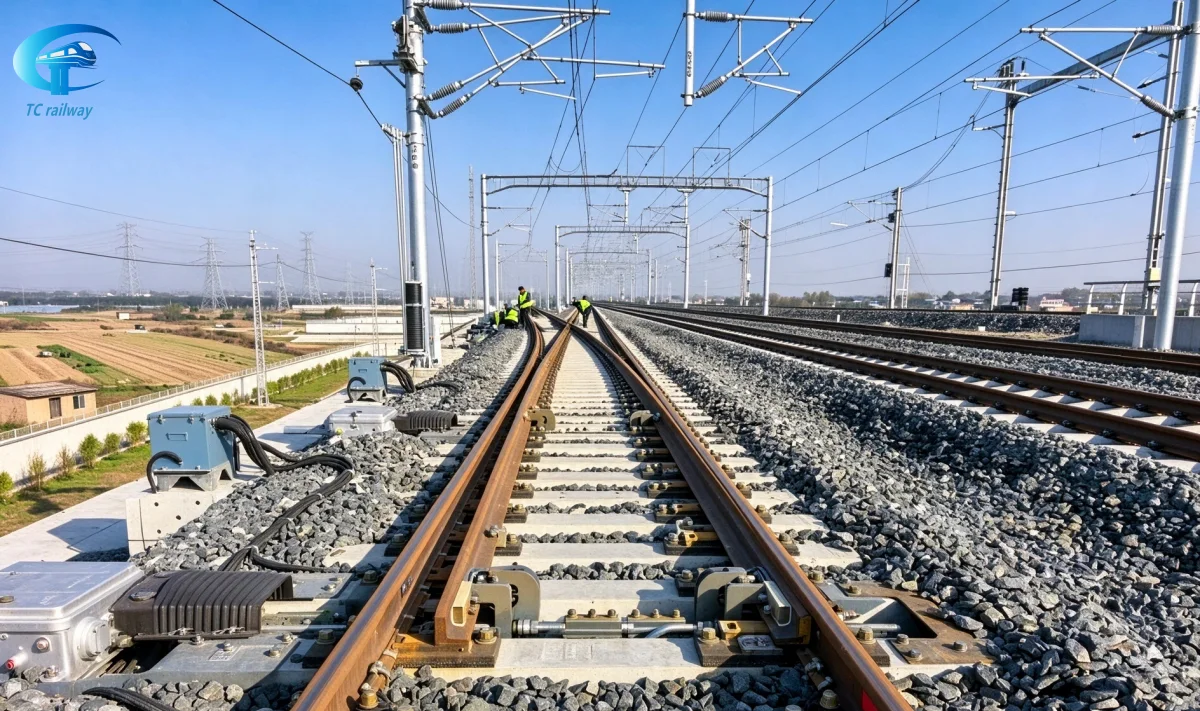
The root cause of "three gaps" on railway turnouts is that critical connections fail to form a tight, stable load-carrying structure. These small millimetre gaps widen under repeated train loads, triggering a chain reaction that ultimately compromises the turnout’s geometry, stability and function. They are safety hazards that we should check closely, control strictly eliminate first during turnout maintenance. Therefore it is critical to accurately measure and adjust these gaps for routine inspections and maintenance.
In conclusion
Although these "three gaps" on railway turnouts are small, their threat to train safety remains unchanged. Therefore, we must maintain rigorous standards and a thorough and careful approach toward all maintenance work. Every time bolts are torqued properly, tie plates are checked for full contact on sleepers, worn parts are replaced, and dynamic and static data are reviewed carefully, it adds another solid layer of protection for train safety. Therefore, We must take every millimetre gap seriously, follow maintenance standards carefully and scientifically, and work together to keep the railway running safely and smoothly.

 English
 Русский