
What Do You Know About Rubber Pad in Railway
Introduction of Rubber Pad In Railway
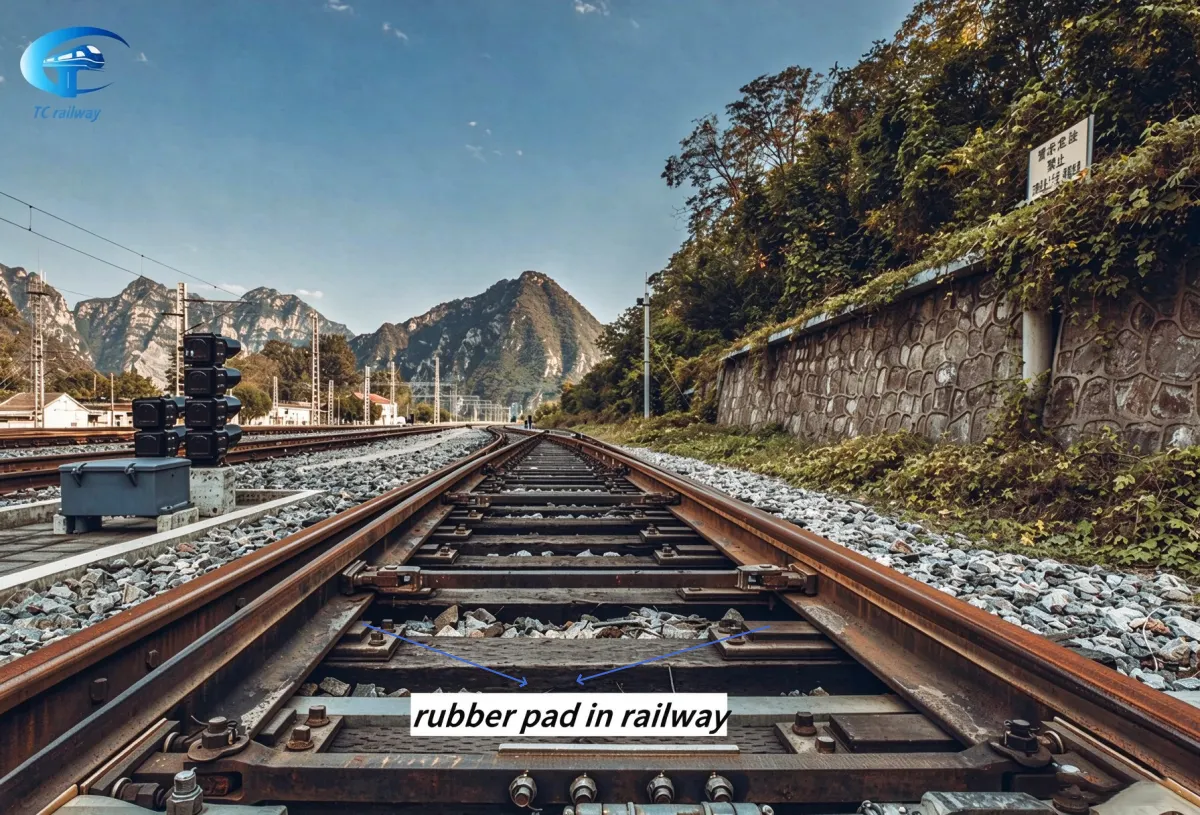
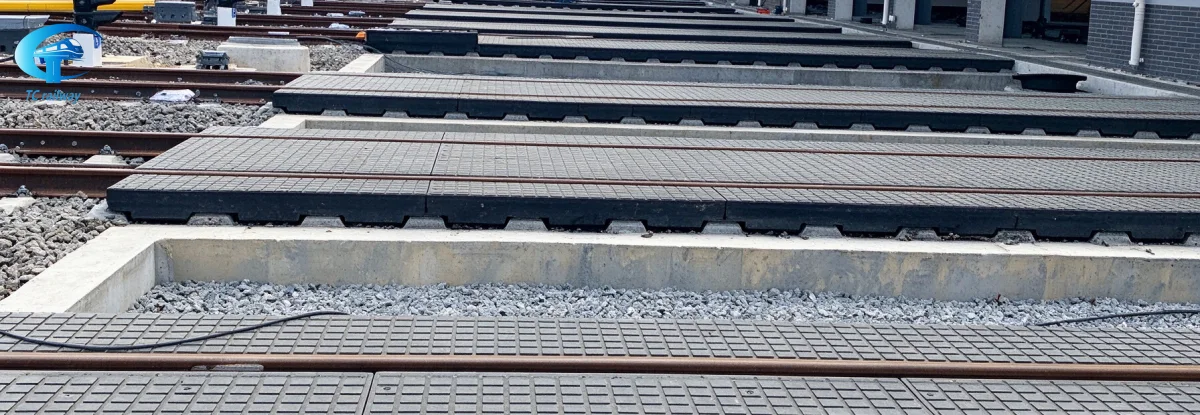
Railway rubber pads are vital components of the track structure, placed between rails and concrete sleepers. Their main roles are to absorb high-frequency vibration and impact loads from train passage, protect subgrade and sleepers, and provide electrical insulation for railway signalling systems. Moreover, with atmospheric exposure throughout their service life, rubber pads require excellent natural weathering, cold and heat resistance.
As a specialist manufacturer of rail rubber pads, we have our own production facilities and a professional testing lab. We can not only manufacture the standard rubber pads for ordinary lines, but also customize special shaped rubber pads for turnouts. Our products are widely applied to national railways, urban rail and overseas projects. So we can provide clients with reliable products and one-stop technical support services. If you have any needs, feel free to contact us.
Material of Rubber Pad In Railway
The railway rubber pads we manufacture use natural or synthetic rubber as the main raw materials, and we do not use any reclaimed rubber. We also manufacture composite rail pads, which are fabricated via vulcanization bonding of stainless steel plates and rubber. They feature excellent elasticity, wear resistance, aging resistance and high & low temperature resistance, and suitable for various complex climates and operating conditions.
Types of Rubber Pad In Railway
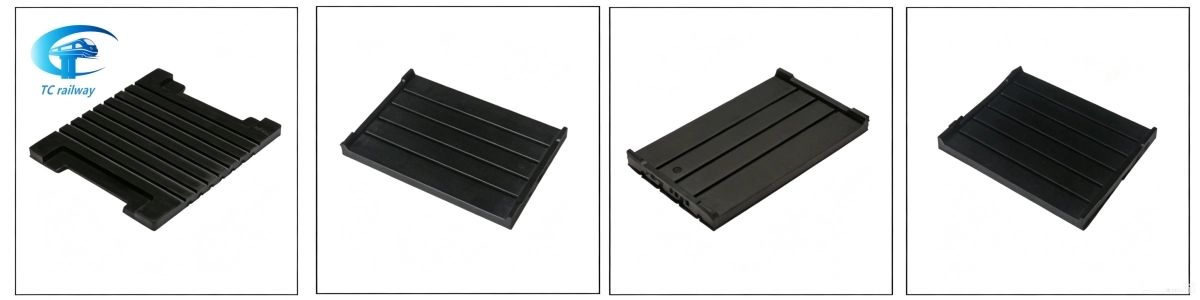
Rubber rail pads for conventional tracks
Rubber rail pads for conventional tracks are used on straight sections of railway main lines, where they bear uniform loads. So they are manufactured to standard specifications, and they meet the requirements for routine vibration damping and electrical insulation. Installation: A single-layer assembly is used for conventional tracks, consisting of rails, rubber rail pads and sleepers.
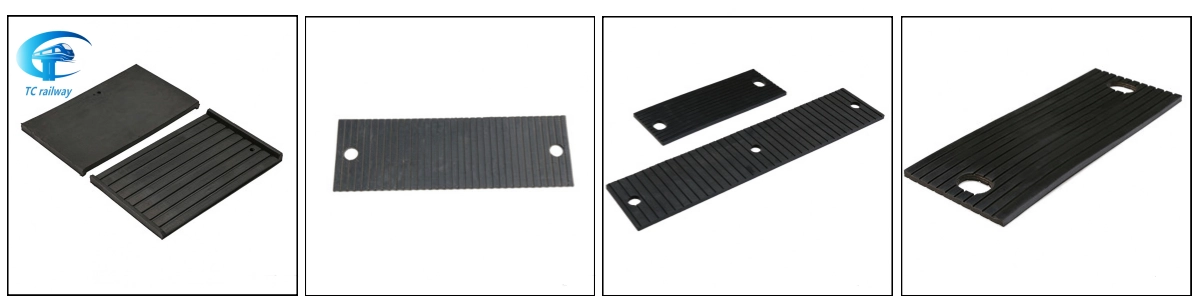
Rubber rail pads for railway turnouts
When rubber rail pads are used at switch locations, they are subjected to complex stress and heavy loads. Hence, they demand superior performance in impact resistance, compression resistance and fatigue resistance. So, most of them have irregular profiles, and their specifications are customized based on switch models. Installation: A double-layer elastic assembly is used in switch sections. It combines rail pads and baseplate pads, offering superior cushioning and accommodating the complex stress conditions of switches.
Function of Rubber Pad In Railway
1. Shock Absorption:
The rubber pads we manufacture effectively absorbs and mitigates high-speed vibration and impact from passing trains, enhances running stability and ride comfort, and reduces rail and sleeper damage.
2. Subgrade and Sleeper Protection:
Our rubber pads distribute and absorb train loads, protect subgrade and sleepers from excessive stress, and prolong their service life.
3. Electrical Insulation:
The rubber pads we manufacture provide electrical isolation for the signal system and ensure accurate and stable signal transmission.
4. Noise Reduction:
For operating environments requiring low noise, such as metro systems, the rubber pads greatly reduce noise from passing trains.
Benefits of Rubber Pad In Railway
1. High Elasticity:
Our rubber rail pads effectively absorb and dissipate vibration and impact from passing trains.
2. Wear Resistance:
Our rubber rail pads maintain favorable performance under long-term service. They reduce replacement frequency and maintenance costs.
3. Ageing Resistance:
Our rubber rail pads offer excellent resistance to natural ageing. They maintain stable performance under various climatic conditions.
4. Cold and Heat Resistance:
Our rubber rail pads maintain elasticity and stability over a broad temperature range.
5. Easy Installation:
Our rubber rail pads are designed with dedicated structures and interfaces. They enable rapid and accurate mounting onto rails.
6. Environmental Protection:
Some of our rubber rail pads are fabricated from eco‑friendly materials. They comply with environmental requirements for modern railway construction.
Models of Rubber Pad In Railway
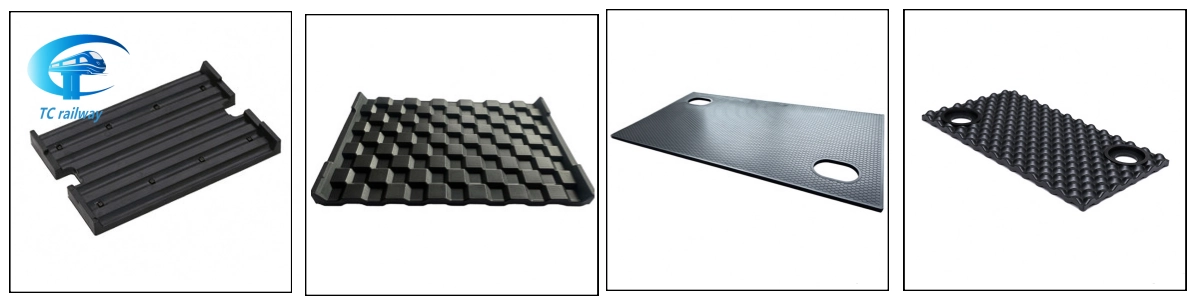
Tiechuang manufactures various models of rubber rail pads to suit rails of different specifications. Common models cover pads for rails with different unit weights: 43kg, 50kg, 60kg and 75kg. Tiechuang can also design dedicated pads for different sleeper types, including wooden sleepers, concrete sleepers and monolithic slab tracks. Tiechuang can also match pads to different fastener systems for conventional railway, metro and high-speed rail. Therefore, we should determine the appropriate rubber rail pad models based on actual project requirements and track design specifications.
Trusted Manufacturers of Rubber Pad in Railway
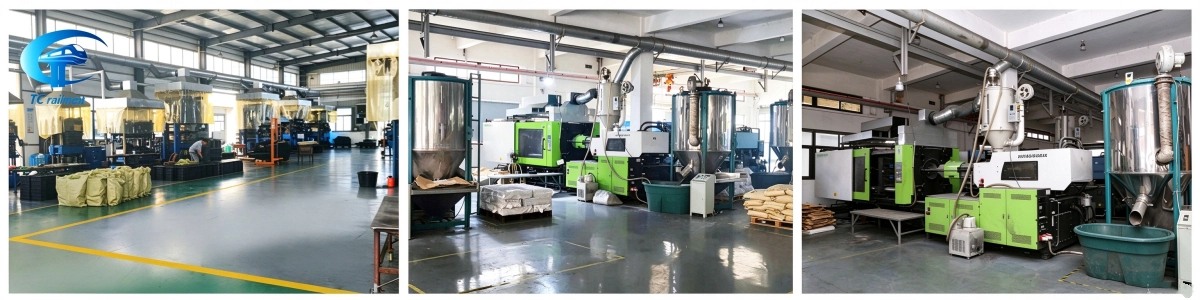
We specialize in manufacturing railway rail pads. We supply rubber rail pads in a complete range of specifications and models, with many items kept in ready stock. Quality is our top priority. We implement stringent inspections throughout every production phase, ranging from raw material sourcing and precision processing to on-site installation on railway tracks. We have established long-term partnerships with metro and high-speed rail projects across the globe. Overseas clients are warmly invited to reach out to us for inquiries and orders.
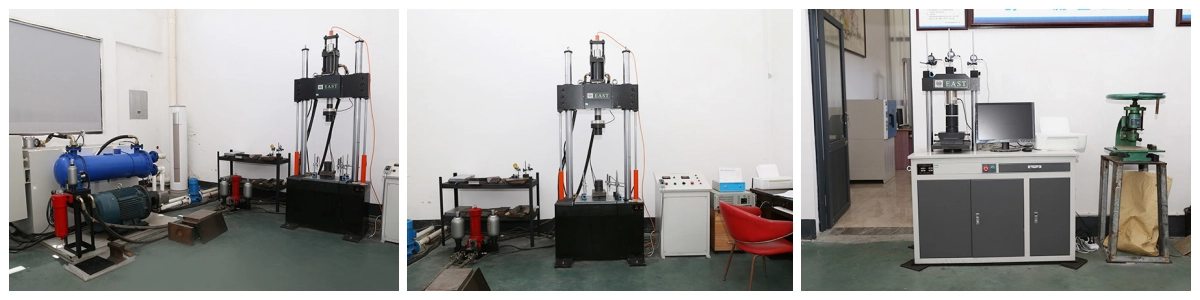
We prioritize product quality control and strictly comply with the ISO9001 quality management system. From order review and raw material procurement to finished-product inspection, we conduct rigorous checks and maintain full documentation at every production stage to ensure consistent qualified outputs. Our workshop features a full suite of testing equipment, professional inspectors and a mature standardized QC system. Each production batch goes through in-process monitoring and final pre-shipment inspection. Furthermore, we submit samples annually to CNAS-accredited third-party laboratories for comprehensive performance testing. Feel free to contact us. We look forward to partnering with more overseas customers.

 English
 Русский