
Elastic Rail Clips Manufacturing Process: Type A Clips for Type I Fastening Systems
Product Specifications
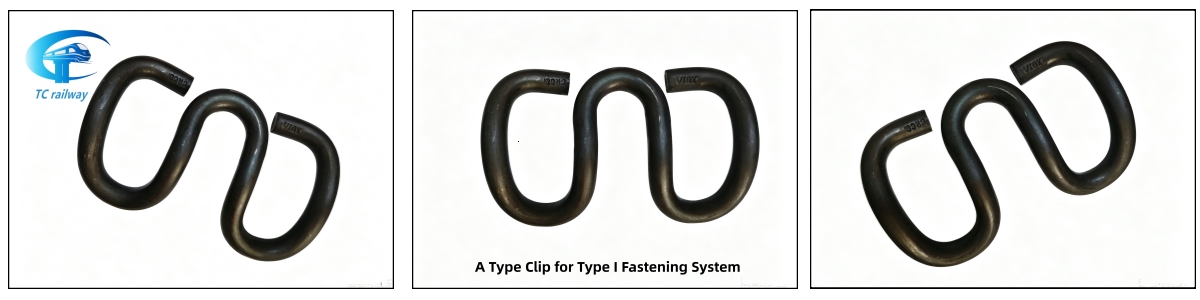
Product: Type A Elastic Rail Clip for Type I rail fastening system
Raw material: 60Si2Mn / 60Si2MnA spring steel
Unit weight:0.480 kg per piece
Application:Railway track fastening, concrete sleeper projects
Type A Elastic Rail Clips Manufacturing Process Flow
Raw Material Inspection → Cutting → Heating → First Forming → Second Forming → Third Forming → Quenching → Tempering → Anti-Rust Treatment → Final Inspection → Packaging & Warehousing
Step-by-Step Elastic Rail Clips Manufacturing Process for Type A Elastic Rail Clips
1. Raw Material Inspection
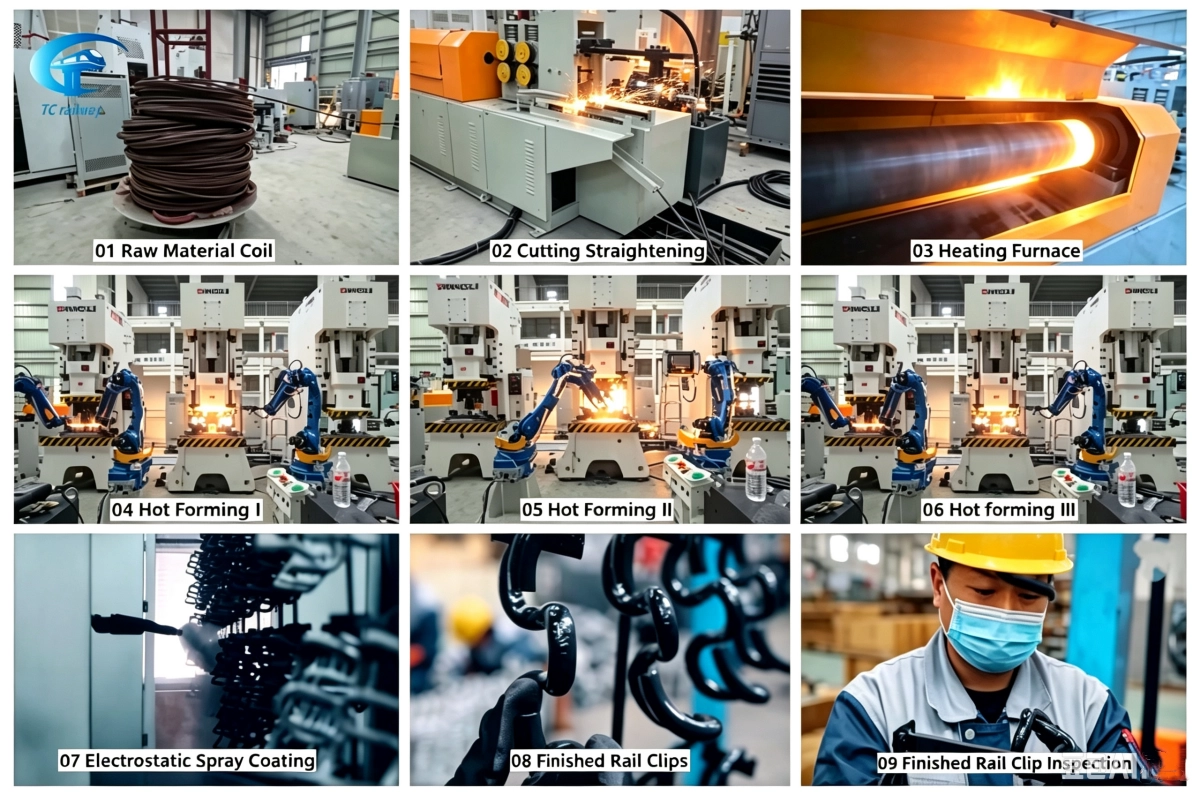
As a reliable elastic rail clip manufacturer, we strictly control all incoming raw materials for Type A elastic rail clip production. Our technical team verifies chemical composition and physical properties one by one throughout the inspection, using precision instruments such as hardness testers, carbon-sulfur analyzers, material testing machines, and metallurgical microscopes. This ensures full traceability and consistent performance for every batch. Only materials that pass inspection move on to the cutting and heating stages.
2. Precision Cutting
We cut spring steel bars to exact lengths. Burrs on the cut ends are strictly controlled, and the ends are free from horseshoe‑shaped deformation or protrusions. We inspect equipment and dies before production and launch full‑scale production only after the first‑article inspection passes. We perform in‑process self‑inspection during production and remove blanks with cracks, rust or other defects. Only qualified blanks proceed to the next processing steps for Type A elastic rail clips.
3. Constant-Temperature Heating
Heating is the critical step determining the forming quality of Type A elastic rail clips. We use a medium‑frequency induction furnace to heat blanks to 990±40 ℃ and monitor each workpiece with an infrared thermometer. Strict temperature control is implemented throughout the process. If a blank shows a “black head” (uneven heating) or deviates from the required temperature range, we stop the production line for immediate adjustment. Unqualified workpieces will not be passed to forming.
4. First Hot Forming
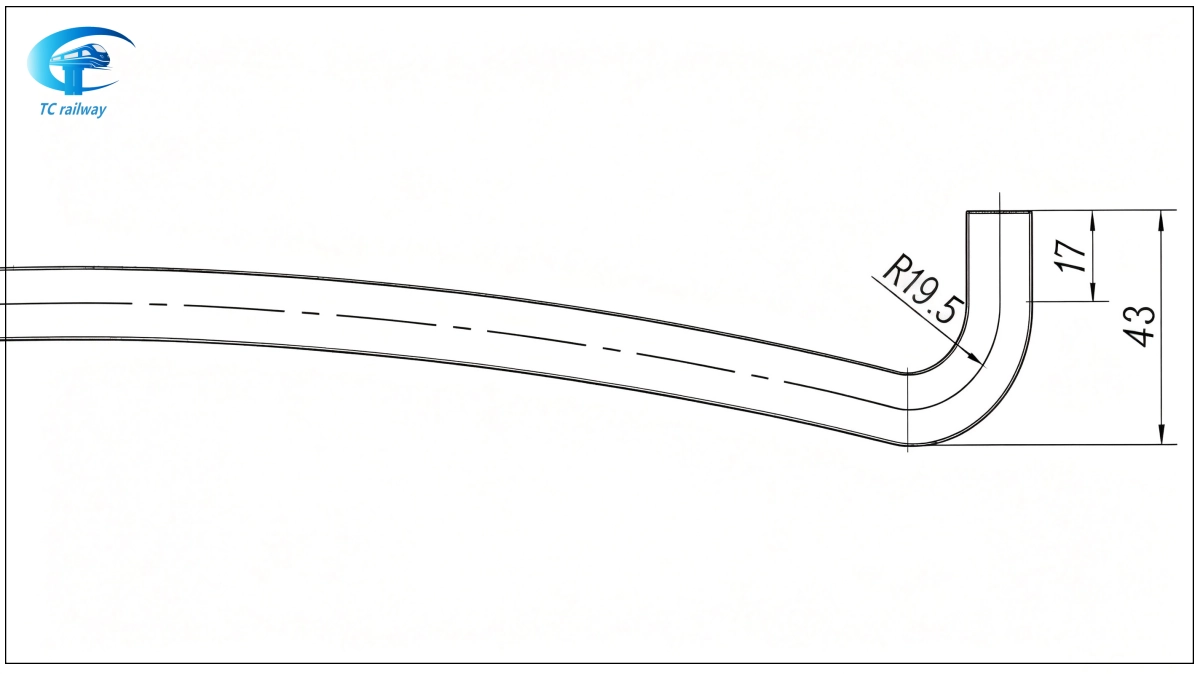
We use a 63‑ton press to complete one‑pass hot forming on heated blanks for precise shaping at target forming temperature. Dies and ejectors are precisely aligned to keep stable outer dimensions. We place formed workpieces on dedicated racks to avoid impact damage before transferring them to the second hot forming stage.
5. Second Hot Forming
We use a 63‑ton press equipped with dedicated progressive dies for secondary bending and precise positioning of pre‑formed blanks. Rigorous self‑inspections are conducted on critical dimensions to guarantee stable geometry of each elastic rail clip body.
6. Third Hot Forming
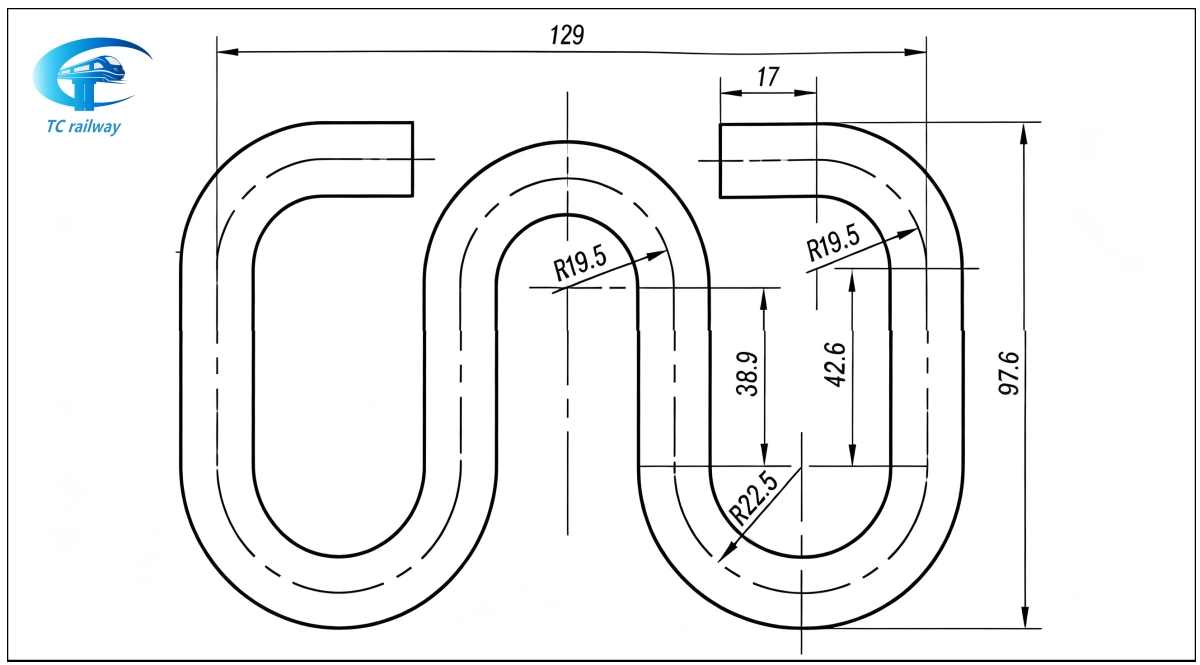
We use an 80‑ton press for the third hot forming to finish the overall profile of elastic rail clips. In‑process self‑inspections are performed after forming to ensure all dimensions comply with drawing specifications. Semi‑finished clips are directly transferred for quenching.
7. Professional Quenching Treatment
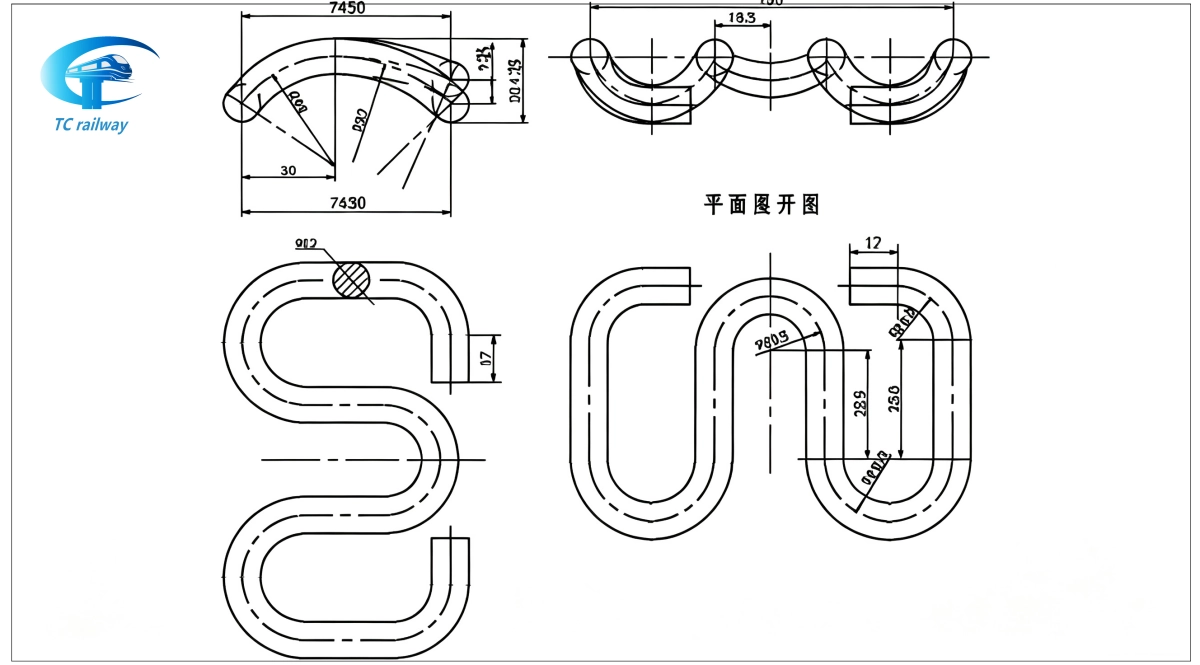
Quenching is the core process determining the mechanical properties of elastic rail clips. Pre‑formed clips undergo temperature inspection. Workpieces meeting the required temperature are rapidly cooled in quenching oil to develop a fine martensite microstructure.
8. Precise Tempering Process
We carry out tempering immediately after quenching to relieve internal residual stress in Type A elastic rail clips, optimize their mechanical properties and enhance fatigue resistance while preventing brittle fracture. We also use special inspection and self‑checks to make sure finished Type A clips meet working conditions of Type I rail fastening systems.
9. Customizable Anti-Rust Treatment
As an experienced elastic rail clip manufacturer, we offer flexible anti‑rust solutions for finished clips. Normally we apply oil coating, and alternative anti‑rust treatments are available upon customer request. Such treatment keeps elastic rail clips rust‑free during transportation and storage.
10. Strict Final Inspection
At the final‑inspection phase, we test each batch of Type A elastic rail clips following sampling plans. Inspection covers appearance, dimensions and mechanical properties in compliance with relevant standards. Clip surfaces must be free of cracks, corrosion, oxide scale and burrs. Non‑conforming products are clearly marked and segregated; only qualified clips are approved for shipment.
11. Packaging & Warehousing
Qualified clips are bundled with steel wire, 20 pieces per bundle. Products go into storage and are ready for delivery, only after our QC inspector issues a certificate of conformity to maintain full‑product traceability.
Professional Elastic Rail Clip Manufacturer
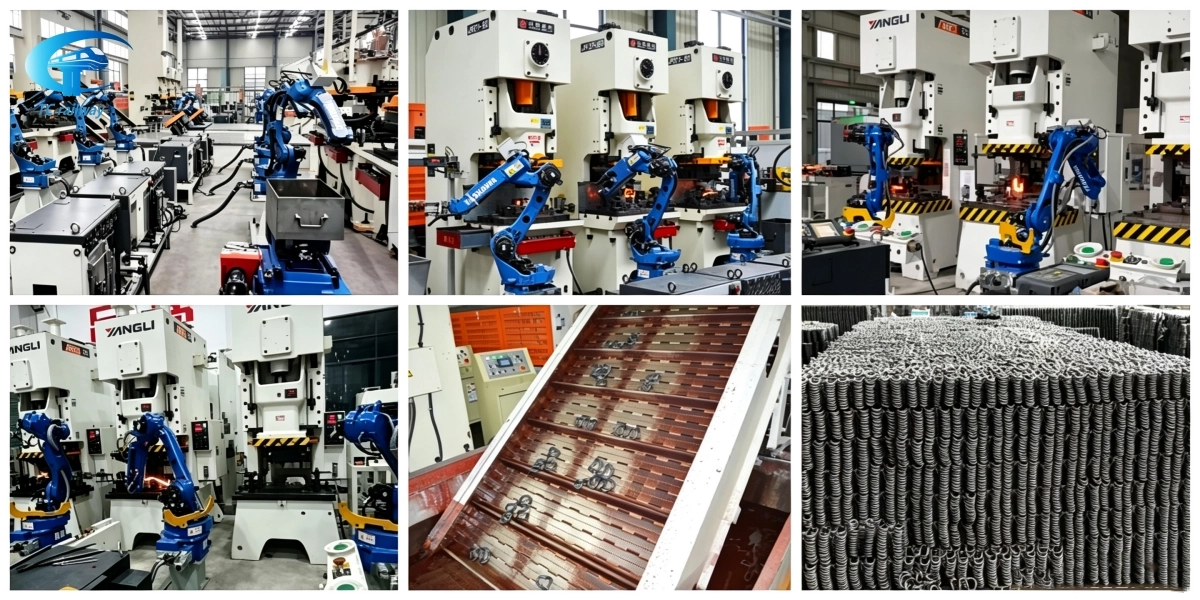
As a professional elastic rail clip manufacturer, we manage every link of the elastic rail clips manufacturing process: incoming raw‑material inspection, multi‑pass hot forming, precision heat treatment and final‑product inspection. We operate multiple automated elastic rail clip production lines that support various spring‑clip models via interchangeable mold sets. Our daily production capacity reaches up to 30,000 pieces.
We supply a full range of rail fastening clips including E‑type clips, PR clips, SKL rail clips, Fastclip, Deenik clips, Nabla clips, Russian GOST rail clips and Korean rail clips, as well as custom rail clips manufactured according to clients’ drawings and specifications. Feel free to contact us for technical documents and quotations. You are warmly welcome to visit our factory and inspect our spring clip production lines. We are your trusted elastic rail clip manufacturer delivering standardized, high-precision elastic rail clips manufacturing process for reliable Type A rail clip solutions worldwide.

 English
 Русский